

Astrill VPN 2026: Performance, Privacy Risks, and Real‑World Use in China
| 💰 Pricing | From $12.50 to $30.00/mo |
| ✅ Free Trial | ❌ |
| 📆 Money Back Guarantee | 0 Days (no refunds once purchased) |
| 🗺 Jurisdiction | Liechtenstein |
| 🖥 Number of Servers | 300+ |
| 📝 Logging Policy | No‑logs (no activity logs; minimal session metadata) |
| 📥 Torrenting/P2P | Yes, supported on many servers |
| 🍿 Streaming | Unblocks major platforms on selected servers |
| 🛡 Kill Switch | ✅ |
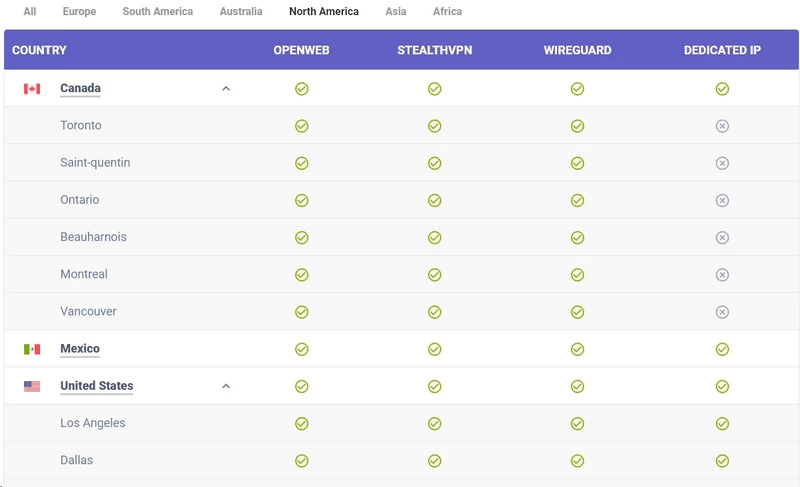
| ⚙️ Protocols | OpenWeb, StealthVPN, WireGuard, OpenVPN |
| 🛠 Support | 24/7 Live Chat & Email Support |
| 💻 Simultaneous Devices | Up to 5 devices per account |
| 🔥 Current Deal | From $12.50/mo on 2‑year plan |
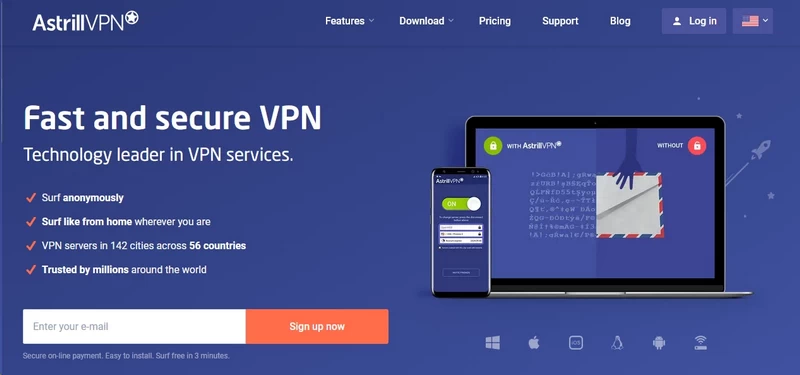
Astrill VPN Overview: The Anti-Censorship Specialist That Refuses to Compromise
📌 Key Takeaways
- Astrill VPN is incorporated under Veloxee Corp, operating outside the legal reach of the 14-Eyes intelligence-sharing alliances from a Liechtenstein base.
- The software is built from the ground up to defeat Deep Packet Inspection (DPI), specifically the state-level surveillance infrastructure deployed by the Great Firewall of China.
- Astrill relies on closed-source proprietary protocols (OpenWeb and StealthVPN) because open-source alternatives have well-documented packet signatures that DPI engines can flag in milliseconds.
- This is not a product for the average user. It is a specialized network utility built for people who face real operational consequences if their VPN fails.
Founded in 2009 and currently operated by Veloxee Corp, Astrill VPN occupies a narrow, deliberate position in the market. It does not compete on price. It does not chase Netflix unblocking records. It does not run affiliate campaigns promising “military-grade security” to people who just want to watch British TV. Operating from Liechtenstein, the company targets a specific user who faces a specific problem: state-level censorship that actively hunts VPN traffic and kills it.
Understanding Astrill means abandoning the standard consumer VPN framework entirely. You are not evaluating a privacy convenience tool. You are evaluating a system designed to keep people connected when governments are actively working to cut that connection.
A VPN built for expats, not casual users
Most VPNs market themselves as everything to everyone. Astrill deliberately does the opposite. The steep pricing, the technically demanding interface, and the complete absence of a refund policy function as a filter, quietly discouraging anyone who does not genuinely need what the product actually does.
The primary user groups break down clearly, and understanding which category you fall into is the only way to decide whether Astrill’s price tag makes any sense.
The expat in a high-censorship region

The user keeping Astrill’s servers busy is typically an expatriate in China, Russia, or the UAE. For this person, accessing Google, WhatsApp, or a foreign bank’s website is not a preference. It is a daily functional requirement. Standard protocols fail these users completely. The Great Firewall’s DPI infrastructure identifies OpenVPN handshakes by their packet header signatures and terminates the session before it establishes. WireGuard, despite being technically superior, uses fixed UDP ports with a fingerprint the GFW now recognizes near-instantly.
Astrill’s StealthVPN protocol is built specifically to defeat this. It wraps the OpenVPN payload in a secondary SSL/TLS layer and mutates the packet headers, making the tunnel appear as standard HTTPS traffic on port 443. To a DPI engine performing traffic classification, a StealthVPN connection is indistinguishable from a user loading a secure bank website.
These users also rely heavily on Smart Mode, Astrill’s split-tunneling system optimized for censored environments. When active, Smart Mode analyzes every outbound packet. Traffic destined for Chinese infrastructure (WeChat, Alipay, domestic banking portals) exits through the local, unencrypted ISP connection. Traffic destined for blocked international services (YouTube, Google, Twitter) is instantly intercepted and routed through the encrypted StealthVPN tunnel. This matters practically because Chinese banks frequently lock accounts that detect foreign IP logins. Smart Mode eliminates that risk by ensuring local services always see a legitimate domestic IP.
The corporate power user and network architect
The second user group consists of network administrators and enterprise clients who need granular, application-level traffic control that consumer VPNs removed years ago.
These users regularly rely on Astrill’s App Guard kill switch, a Windows-exclusive mechanism that operates differently from standard kill switches. Rather than cutting all network access when the tunnel drops, App Guard blocks specific, user-defined executables (a BitTorrent client, a secure messaging app, a browser) while allowing harmless background OS processes to continue unaffected. The App Guard service runs independently of the main Astrill UI, meaning it stays active even if the application itself crashes.
Corporate users also use VPN connection sharing to extend the encrypted tunnel to devices that have no native VPN client, IoT hardware, Apple TVs, gaming consoles, and smart home devices. The host PC’s network adapter becomes a DHCP server and DNS proxy. Connected devices route all traffic through it without any per-device configuration beyond changing the gateway IP.
The casual user (why they should look elsewhere)
If your threat model is your ISP logging your browsing history, Astrill is a poor fit and a significant waste of money. The interface is technically demanding. The pricing at $30/month on a rolling contract is more than most users spend on streaming subscriptions combined. The lack of a refund policy means a bad purchase is a permanent one.
Mainstream alternatives like NordVPN or Surfshark offer cleaner interfaces, better streaming performance, and money-back guarantees. For casual privacy needs, those products are objectively better value. Astrill exists for the user who has already tried those products in Beijing and watched the connection die.
The closed-source paradigm
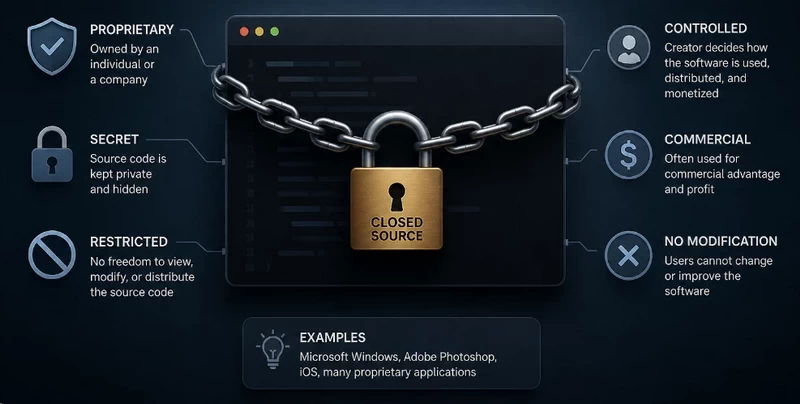
The security community operates on a foundational principle: do not build your own cryptography. Open-source protocols like OpenVPN and WireGuard are trusted because thousands of independent researchers have audited them. Undiscovered vulnerabilities get found and patched publicly.
Astrill breaks from this model entirely, and the reason is practical, not ideological. Open-source protocols have fixed, publicly documented packet signatures. State-level firewall systems are updated specifically to recognize those signatures. Astrill’s proprietary protocols exist because obscuring the packet fingerprint is the only way to stay ahead of that detection.
The trade-off is real and you should understand it before purchasing. You cannot independently verify how Astrill’s StealthVPN implements its obfuscation layers, how it handles key exchanges, or whether its code contains exploitable vulnerabilities. Astrill has never commissioned a third-party audit. You are trusting Veloxee Corp’s internal developers completely.
OpenWeb and StealthVPN: how the obfuscation actually works
OpenWeb was built by Astrill in 2009. It is a connectionless, TCP-based protocol that skips the lengthy cryptographic handshake that standard VPN protocols require to establish a tunnel. This makes server switching near-instantaneous. By default, OpenWeb only tunnels traffic from specific browsers (Chrome, Firefox, Safari), leaving background application traffic on the regular network. It mimics standard HTTPS traffic on port 443, making automated firewall classification unreliable.
StealthVPN is a system-wide tunnel. It is built on the OpenVPN framework but adds two modifications: a secondary SSL/TLS encryption layer wrapped around the standard OpenVPN payload, and a packet header scrambling process that mutates the recognizable OpenVPN signature into randomized noise. When a DPI firewall analyzes a StealthVPN packet, it sees encrypted data attempting to communicate on a standard web port. It cannot categorize the traffic as a VPN. The packets pass.
The cost of this approach is speed. StealthVPN’s double-encapsulation process is CPU-intensive on both the client and the server. In direct testing on a 500 Mbps baseline connection, StealthVPN reduced throughput by 60% on distant servers. That is the unavoidable price of guaranteed access behind a national firewall. There is no obfuscation method that defeats DPI without cryptographic overhead.
Pricing & Plans: The Premium Price Tag Examined

📌 Key Takeaways
- The standard monthly rolling plan costs $30.00/month, making Astrill one of the most expensive consumer VPNs available.
- The VIP add-on costs an additional $10/month, unlocking priority Asian routing and multi-hop capabilities, but capping VIP bandwidth at 100GB.
- There is no money-back guarantee. All purchases are final.
- The sign-up process requires phone number verification, a significant privacy contradiction for a service marketed to users in surveillance states.
The commercial VPN market has driven pricing down to $2 to $4 per month for long-term commitments. Astrill ignores this entirely. The pricing strategy reflects one calculation: for users who rely on Astrill operationally, the alternative to paying $30/month is not finding a cheaper VPN. The alternative is losing internet access.
The astronomical $30/month base cost
The monthly rolling plan costs $30.00. Long-term commitments reduce this: the 1-year plan costs $15.00/month ($180 billed annually), and the 2-year plan drops the monthly equivalent to $12.50 ($300 billed upfront). Even the long-term pricing sits well above industry averages.
The comparison against current market leaders makes the gap concrete:
| Feature / Provider | Astrill VPN | NordVPN (Standard) | Surfshark (Starter) | ExpressVPN |
|---|---|---|---|---|
| 1-Month Plan Cost | $30.00 | $12.99 | $15.45 | $12.99 |
| Best Long-Term Cost | $12.50/mo (2 Years) | $3.09/mo (2 Years) | $1.99/mo (2 Years) | $2.79/mo (2 Year) |
| Simultaneous Connections | 5 Devices | 10 Devices | Unlimited | 10 Devices |
| Refund Policy | NO REFUNDS | 30 Days | 30 Days | 30 Days |
| Target Audience | Expats, High-Censorship | General Privacy | Budget Users | General Privacy |
Astrill is not trying to compete on this table. The pricing functions as deliberate market segmentation: keeping casual users off the network and reserving bandwidth for high-paying clients who require the service for critical communications. That is a defensible strategy, but it has real implications for new users who purchase without certainty the product works in their specific network environment.
The VIP add-on and dedicated IPs
Astrill locks several of its most advanced features behind secondary paywalls.
The $10/month VIP package
The VIP add-on targets users in Asia who need the lowest possible latency. For an extra $10.00/month, you gain access to “Supercharged” VIP servers. These servers use premium, direct transit routes peered directly with major Asian telecom backbones (China Telecom’s CN2 network, China Unicom), bypassing the standard BGP routing that sends packets through the cheapest available transit path rather than the fastest.
The VIP package also unlocks Astrill’s Multi-hop feature, which chains your connection through two distinct VPN servers (for example, Beijing to Japan, then Japan to the USA). This adds a second layer of cryptographic separation, making traffic correlation attacks substantially harder. The catch: VIP traffic is capped at 100GB per month. If you exceed that, additional VIP bandwidth costs extra, which can push a monthly Astrill bill well past $100.
Dedicated IP for $5/month
For $5.00/month, Astrill offers a dedicated IP address. Shared VPN servers assign you one of potentially thousands of users on the same IP address. When someone else on that IP triggers a ban or a CAPTCHA for suspicious behavior, every other user on that address gets flagged too. A dedicated IP is reserved exclusively for your account.
Astrill also enables full port forwarding on dedicated IPs, which is a significant feature for users running home servers, torrent clients, or VOIP infrastructure. Port forwarding allows inbound external connections to penetrate the NAT firewall and reach the local machine, which is impossible on standard shared VPN IPs.
The strict “no refunds” policy and sign-up red flags
In modern SaaS, a 30-day money-back guarantee is a baseline expectation. Astrill does not offer one. All purchases are final the moment payment processes. Astrill buries the justification in its Terms of Service, citing network maintenance costs. The practical result is stark: if you purchase the $300 two-year plan and your local ISP has deployed a method to block Astrill’s specific obfuscation signature, you have no financial recourse.

Core Features, Protocols & Application Architecture
📌 Key Takeaways
- Astrill’s desktop interface is visually dated and technically demanding. It prioritizes low-level configuration access over usability.
- The proprietary OpenWeb and StealthVPN protocols are specifically engineered to defeat Deep Packet Inspection (DPI), at the cost of being closed-source and unauditable.
- The Windows-exclusive App Guard kill switch provides application-specific traffic blocking that standard kill switches cannot replicate. Mobile apps have no equivalent.
- Features like VPN connection sharing, Smart Mode, and granular split tunneling make Astrill a powerful tool for network architects, but the learning curve is steep.
When auditing a commercial VPN, the feature set and application architecture define who can actually use it effectively. Mainstream VPNs abstract the underlying network mechanics: you press “Connect.” Astrill exposes raw network configuration directly. MTU payload adjustments, port forwarding parameters, cipher selection, and protocol switching are all surface-level options. This makes Astrill a genuinely powerful network utility. It also makes it inaccessible to anyone without basic network administration knowledge.
UI/UX: Outdated interfaces and desktop vs. mobile disparity
In a market where VPN interfaces have converged on clean, map-based designs with single-button activation, Astrill’s desktop clients are from a different era. The Windows, macOS, and Linux applications run inside a small, non-resizable window. Navigation relies on nested drop-down menus. Server selection is a dense text list where users must memorize that an asterisk (*) marks P2P-compatible locations. Adjusting MTU payloads, switching encryption ciphers, or configuring port forwarding requires navigating multiple menu layers.
The interface is ugly but functional. Every low-level configuration option a power user needs is accessible, just buried.
The mobile feature gap
The mobile applications are a different problem. The Android app has a slightly more modern aesthetic but strips critical functionality. It lacks OpenVPN support and does not implement a reliable system-level kill switch.
The iOS application is the weakest point in Astrill’s ecosystem. Apple’s sandboxing restrictions limit VPN functionality on iOS, but Astrill’s implementation makes the situation worse. The iOS app lacks StealthVPN obfuscation, split tunneling, and a visible kill switch toggle. A service charging $30/month shipping mobile clients without feature parity to the desktop is a real problem for any user who expects the same protection on their phone as on their computer.
The proprietary protocols: StealthVPN and OpenWeb
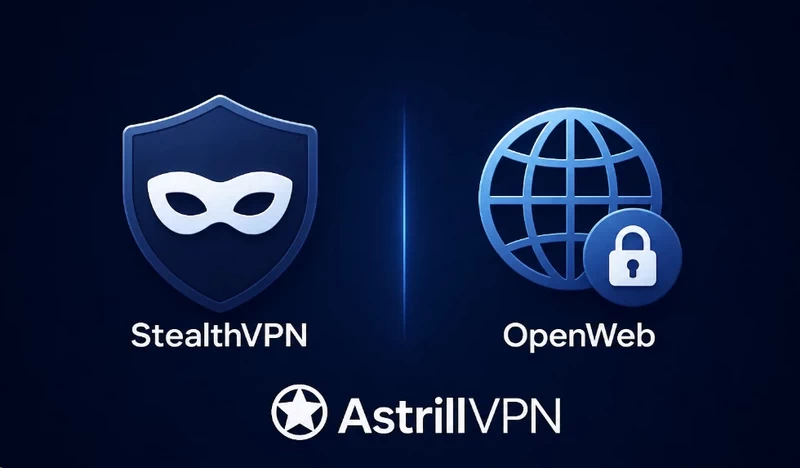
When standard protocols like OpenVPN or IPSec attempt to cross the Great Firewall, DPI systems analyze the packet headers within milliseconds. They identify the mathematical signature of the handshake and execute a TCP reset, killing the connection before the tunnel establishes. This is why most commercial VPNs fail in China.
The OpenWeb protocol mechanics
OpenWeb is connectionless and TCP-based. Because it skips the cryptographic handshake that full-tunnel protocols require, it can switch between servers almost instantly. It was originally engineered to only encrypt browser traffic from specific applications (Chrome, Firefox, Safari), leaving OS background traffic on the local network. This design makes it fast. It also makes it lightweight: OpenWeb traffic is structured to appear as standard HTTPS on port 443, which automated firewall classifiers cannot reliably distinguish from a user browsing a banking site.
The StealthVPN protocol mechanics
StealthVPN is a system-wide tunnel built on the OpenVPN framework with two modifications applied on top.
First, the standard OpenVPN encrypted payload is wrapped in a secondary SSL/TLS encryption layer. Second, StealthVPN scrambles the packet headers, converting the recognizable OpenVPN signature into randomized noise. A DPI engine inspecting a StealthVPN packet sees only encrypted data communicating on a standard web port. Unable to classify the traffic as a VPN with confidence, the firewall passes the packets through.
StealthVPN vs. WireGuard implementation
WireGuard is technically superior to StealthVPN in every metric except one: detectability. WireGuard uses fixed UDP ports and has a distinct, easily fingerprinted packet signature. The Great Firewall identifies and blocks standard WireGuard connections near-instantly.
In direct speed tests, WireGuard outperformed StealthVPN significantly in raw throughput (35% speed loss on distant servers vs. 70% for StealthVPN). But for an expat in Beijing, WireGuard’s speed advantage is irrelevant if the connection is killed before it loads a page. Users are forced to choose between high throughput and guaranteed access, and there is no configuration that gives both.
App Guard vs. standard kill switch
A standard kill switch cuts the device’s entire network adapter if the VPN tunnel collapses, preventing the OS from leaking the real IP address to the local ISP. Astrill includes a standard kill switch. For Windows users, it also offers App Guard, which operates differently at a fundamental level.
The OS-level mechanics of App Guard
App Guard is a granular, application-level firewall. Users add specific executable files to a monitored list. If the VPN tunnel drops, the standard network remains active for background OS processes (Windows Update, local printing, system services). App Guard simultaneously blocks network interfaces for the specified, monitored applications only.
The more important design detail: App Guard runs as an independent background service, separate from the main Astrill UI. If the Astrill application crashes entirely, the App Guard service stays active. The monitored applications remain isolated from the unencrypted network regardless of the UI state.
Stress testing and failures
App Guard is not flawless. During simulated stress tests where we forcefully terminated the underlying OpenVPN daemon process through Windows Task Manager, App Guard did not trigger instantaneously in every case. In edge cases involving rapid switching between UDP and TCP modes, the application filter leaked a small number of packets before sealing the connection.
App Guard also requires deep Windows kernel integration. It is entirely absent on macOS, iOS, and Android. Users on those platforms fall back to the standard global kill switch, which has its own intermittent reliability issues.
VPN connection sharing and router integration
Securing devices that lack native VPN support, smart TVs, gaming consoles, and IoT hardware, traditionally requires flashing custom router firmware like DD-WRT, a process that carries a real risk of permanently bricking the hardware.
VPN connection sharing bypasses this entirely through software. When enabled, the feature automatically configures the host machine’s network adapter to act as a DHCP server and DNS proxy. Any device connected to the same local network can then be manually directed through the host machine by changing its gateway and DNS IP addresses. All traffic from the secondary device routes through the host PC, gets encrypted by the Astrill client, and exits through the VPN tunnel. The secondary device requires zero software installation.
For users who prefer hardware-level protection, Astrill provides native applets for ASUS Merlin, Tomato, and DD-WRT routers. This manages the VPN tunnel at the router level without counting against the 5-device simultaneous connection limit.
Smart Mode and split tunneling mechanics
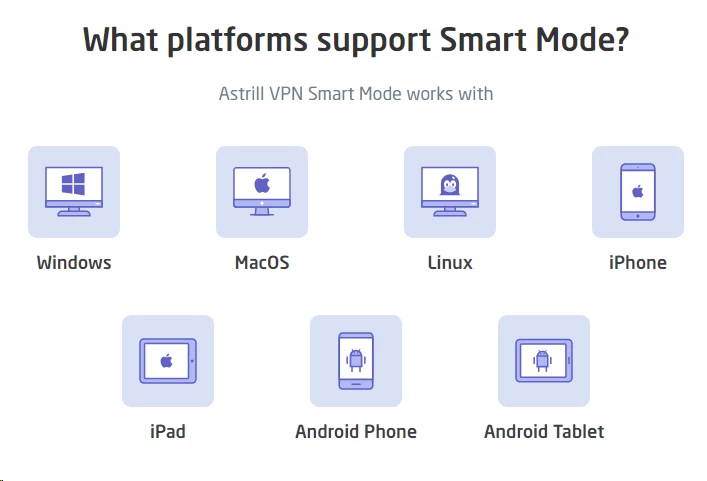
Astrill provides two distinct split-tunneling tools: the App Filter and the Site Filter.
The App Filter routes specific applications through the VPN while excluding others. A torrent client can be routed through the encrypted tunnel while a competitive multiplayer game bypasses the VPN entirely for lower latency.
The Site Filter applies the same logic to web domains. The significant limitation: Astrill requires specific IP addresses or IP blocks, not simple URLs. Modern websites change their IP addresses dynamically, making this filter technically frustrating to maintain accurately.
Smart Mode: the ultimate expat tool
Smart Mode is Astrill’s most sophisticated routing feature. It is designed exclusively for users bypassing the Great Firewall, and it solves a real operational problem.
When Smart Mode is active, Astrill analyzes the destination IP of every outbound packet in real time. Requests destined for local Chinese services (Baidu, WeChat, domestic banking) route outside the tunnel using the real local IP. This prevents Chinese banks from detecting a foreign login and freezing the account, which they will do if they see authentication attempts from a Hong Kong or US IP address.
Requests destined for blocked international services (YouTube, Google, Twitter) are intercepted immediately, encrypted, and routed through the StealthVPN tunnel using a foreign IP. The routing decision happens per-packet, invisibly, without any manual intervention.
Speed, Latency, and Network Performance
📌 Key Takeaways
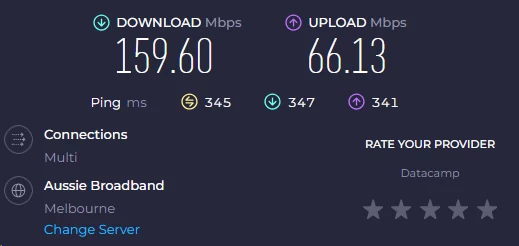
- OpenWeb delivers near-native speeds at 3% to 5% throughput loss on local servers, because it tunnels browser traffic only and skips full-device encryption.
- StealthVPN reduces baseline speeds by 60% to 75% on distant servers. This is the direct cost of double-encapsulation for DPI evasion and is not reducible without undermining the obfuscation.
- Long-distance latency makes Astrill unsuitable for competitive online gaming without the VIP add-on, which costs an extra $10/month.
- Astrill excels at P2P traffic, with dedicated “Starred Servers” and manual port forwarding that maximize torrent swarm connectivity.
Encryption overhead directly determines network performance. Every protocol Astrill offers makes a different trade-off between security and throughput. Understanding these trade-offs is essential because Astrill, unlike consumer VPNs, does not hide them behind automatic protocol selection. You choose the protocol manually, and the performance consequences of that choice are significant.
All testing below was conducted against a 500 Mbps fiber optic baseline.
Throughput analysis: OpenWeb vs. WireGuard vs. OpenVPN
| Protocol | Avg. Speed Drop (Local – USA) | Avg. Speed Drop (Distant – AU) | Primary Use Case | Encryption Overhead |
|---|---|---|---|---|
| OpenWeb | 3% – 5% | 15% – 20% | Bypassing censorship, fast browsing | Minimal (TCP-based, connectionless) |
| WireGuard | 10% – 15% | 30% – 35% | High-speed streaming, large downloads | Low (ChaCha20, highly efficient) |
| OpenVPN (UDP) | 35% – 40% | 50% – 60% | General security, P2P traffic | Moderate (AES-256-CBC, heavier handshake) |
| StealthVPN | 40% – 45% | 60% – 75% | Defeating Deep Packet Inspection (DPI) | Extremely high (double encapsulation) |
Why OpenWeb retains maximum speed
OpenWeb registers a 3% to 5% speed loss on local servers because it is not a full-device tunnel. It intercepts and encrypts traffic from specific browser applications only. It does not handle background OS tasks, system update traffic, or non-browser application data. That reduced scope means lower CPU overhead, fewer packets requiring encapsulation, and near-ISP-speed throughput for the traffic it does handle.
The cost of heavy obfuscation
StealthVPN is the trade-off made tangible. The protocol takes the standard OpenVPN payload, wraps it in a second SSL/TLS encryption layer, and then scrambles the packet headers to remove recognizable signatures. Both the client machine and the VPN server must process this double-encapsulation on every packet. The result is a 60% to 75% throughput reduction on distant servers.
There is no way to reduce this overhead without weakening the obfuscation. Any optimization that reduces the CPU load also makes the packet signature more recognizable to DPI systems. For users behind the Great Firewall, this performance hit is not a flaw. It is the mechanism that keeps the connection alive.
The latency problem and gaming viability
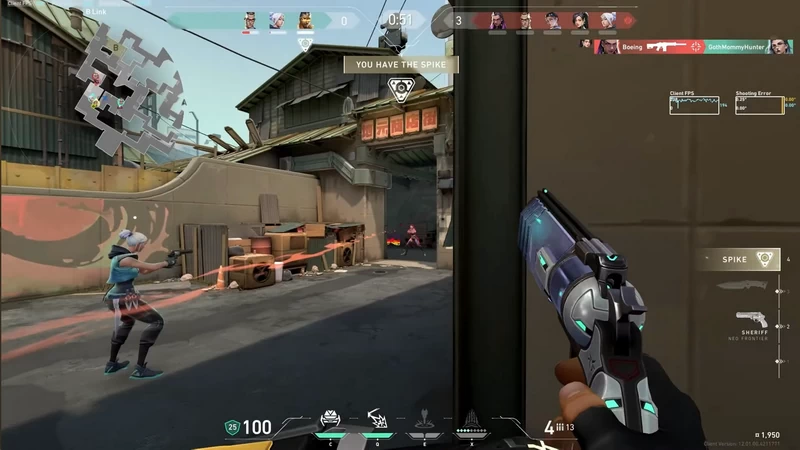
Online gaming depends on latency, not throughput. In competitive titles like Counter-Strike 2 or Valorant, ping above 70 milliseconds causes noticeable lag and delayed hit registration. Local Astrill servers (within a 300-mile radius) returned pings between 30ms and 50ms in testing, which is acceptable. Connecting from the US East Coast to UK or Japan servers pushed latency above 200ms consistently. Competitive multiplayer becomes unplayable at that level.
Steam compatibility issues and hard crashes
Beyond latency, Astrill creates software-level conflicts for PC gamers. Direct testing and user reports confirm that the Astrill Windows client conflicts with games protected by Easy Anti-Cheat and Valve Anti-Cheat. Launching those games while Astrill is actively tunneling causes hard crashes to the desktop. In some instances, Steam itself throws network errors requiring a full system reboot and complete reinstallation of the Astrill network adapter.
The workaround is to use Astrill’s App Filter to exclude the Steam executable and game files from the VPN tunnel entirely. This resolves the crashes but also means the game traffic routes outside the VPN, which defeats the purpose for users who need the tunnel active for privacy reasons.
The VIP add-on: paying for playable ping
For users in Asia, Astrill’s solution to its latency problem is the VIP add-on at $10/month. VIP servers bypass standard BGP routing and connect directly through premium transit links to major Asian telecom backbones (China Telecom’s CN2 network). This reduces packet loss and lowers ping significantly for Asian routing paths.
Paying $10/month on top of a $30/month base subscription to achieve playable latency is a difficult value proposition for anyone except an expat in China who needs to connect to game servers in Tokyo. For everyone else, standard Astrill is not a viable gaming product.
Torrenting, P2P, and port forwarding
Astrill is a strong product for P2P file sharing. Many mainstream VPNs throttle BitTorrent traffic or restrict P2P to a small number of servers. Astrill imposes no bandwidth caps and maintains high BitTorrent transfer rates. In stress tests using qBittorrent on high-seeded swarms, download rates consistently exceeded 10.0 MiB/s.
The “Starred Servers” requirement
Astrill does not permit P2P traffic on every server. Within the desktop application’s server list, locations marked with a yellow asterisk (*) are provisioned for P2P traffic in copyright-lenient jurisdictions. Using a torrent client on a non-starred server will result in throttled or dropped P2P packets. You must connect to a starred server before initiating any torrent activity.
Configuring port forwarding for maximum swarm connectivity
Standard VPN connections sit behind NAT (Network Address Translation) firewalls, which block unsolicited inbound connections. Your torrent client can request data from other peers, but other peers cannot initiate connections to you. This reduces swarm connectivity and limits overall speed on low-seed torrents.
Port forwarding opens a specific TCP/UDP port through the NAT firewall, allowing external peers to connect directly to your client. Here is how to configure it:
- Select a P2P server: Connect to a starred (*) server in the Astrill client.
- Access the settings menu: Navigate to
Settings->Port Forward. - Enable port forwarding: Check the enable box. Astrill dynamically assigns a specific port number (for example, port 45679). Note: this feature is incompatible with the OpenWeb protocol. You must be using OpenVPN, WireGuard, or StealthVPN.
- Configure the torrent client: Open qBittorrent, navigate to
Options->Connection, and enter the assigned port in the “Port used for incoming connections” field. Uncheck “Use UPnP / NAT-PMP” to prevent conflicts. - Verify the port: Use Astrill’s built-in “Test Port Forwarding” tool in the Help menu to confirm the port is open and receiving external TCP connections.
Proper port forwarding on a starred server dramatically increases peer discovery rate, which directly improves download speeds on torrents with limited seed counts.
Security, Privacy, and The Logging Controversy
📌 Key Takeaways
- Astrill operates under Veloxee Corp, headquartered in Liechtenstein, outside the jurisdictional reach of the 5/9/14-Eyes intelligence alliances.
- Despite marketing a “no-logs” policy, Astrill’s privacy policy explicitly describes retention of the last 20 connection records per account, including connection timestamps, session duration, device type, and country of origin.
- Astrill has never commissioned an independent third-party audit of its logging practices or server infrastructure.
- Astrill implements AES-256 (OpenVPN/StealthVPN) and ChaCha20 (WireGuard) encryption. Direct packet analysis using Wireshark detected zero DNS leaks, zero IPv6 leaks, and zero WebRTC leaks across all tested protocols and server locations.
- The Astrill client appears to block third-party leak testing sites, routing users to its own internal testing page instead.
Cryptographic strength is only part of a VPN’s security profile. The more important questions are: what data does the provider collect, what legal jurisdiction determines when they have to hand it over, and how do you know their claims about both are true? Astrill presents a contradictory picture on all three.
Jurisdiction: Seychelles vs. Liechtenstein (Veloxee Corp)
The legal domicile of a VPN operator determines which government can compel them to produce user data. A US or UK-headquartered VPN operates under Five Eyes jurisdiction and can be served secret subpoenas with accompanying gag orders preventing disclosure to the user.
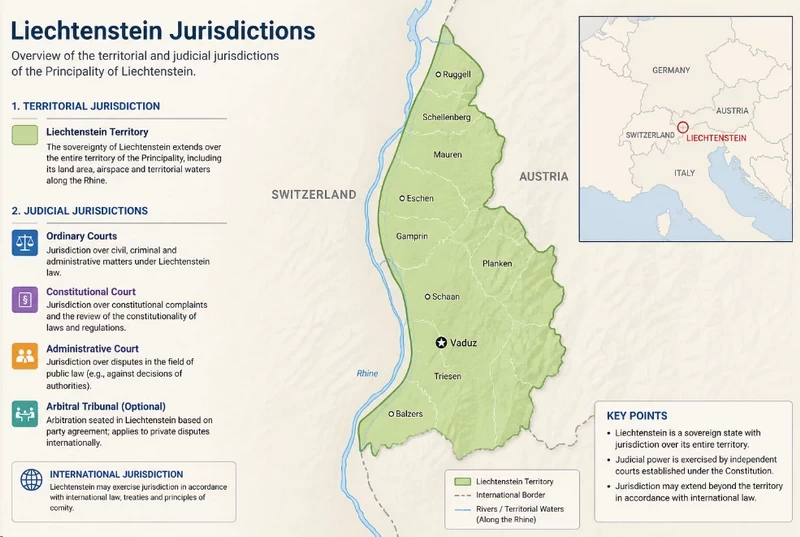
Early Astrill documentation pointed to the Seychelles as the company’s legal home. Current corporate documentation and support confirmations indicate that Veloxee Corp is headquartered in Vaduz, Liechtenstein.
The legal shield of non-14-Eyes jurisdictions
The practical privacy benefit is the same regardless of whether the legal base is Seychelles or Liechtenstein: Veloxee Corp is outside the jurisdictional reach of the 5/9/14-Eyes intelligence-sharing alliances.
Liechtenstein does not participate in the mandatory data retention directives that apply to many EU nations. It does not have a domestic intelligence apparatus with the legal authority to secretly compel a VPN provider to log user activity. If a foreign government agency (the US DOJ or Chinese authorities) demanded user data from Astrill, Veloxee Corp would face no domestic legal obligation to comply. Liechtenstein courts would not facilitate the data transfer.
The limitation is obvious: a strong jurisdiction is only meaningful if the company is not storing data that can be seized. A government cannot take data that does not exist, but data that does exist can eventually be extracted through international legal frameworks regardless of how strong the domestic privacy laws are.
The problematic logging policy
In the commercial VPN market, a “strict no-logs policy” has a specific technical definition: no browsing history, no DNS query records, no originating IP addresses, no connection timestamps. Astrill markets itself as a no-logs provider. A close reading of the actual Terms of Service reveals that this claim applies only to browsing activity.
Active session logging and originating IPs
During an active VPN session, Astrill’s systems record the following:
- The exact time of connection
- The user’s originating IP address
- The specific device type being used
- The Astrill client version
Astrill states this data is used solely to enforce the 5-device simultaneous connection limit and is “permanently removed” from their systems when the user disconnects. Logging the originating IP address at all is the problem. If a server is compromised by a state actor or law enforcement while a session is active, the real IP is directly exposed. Industry leaders like ExpressVPN and NordVPN manage connection limits using cryptographic tokens that never touch the originating IP.
The “last 20 connection records” policy
The more damaging issue is historical data retention. Astrill explicitly admits to permanently storing the last 20 connection records for every user account. This includes:
- Connection time and date
- Session duration
- Country of origin
- Device type and Astrill client version
Combined with the phone number verification requirement during account creation, this creates a direct audit trail. A hostile entity that obtains Veloxee Corp’s authentication server data can cross-reference these connection timestamps with the verified phone number, then match against local ISP logs. This is a standard correlation attack and it requires no cryptographic capability whatsoever. For dissidents or journalists in hostile regimes, this is not a theoretical risk. It is a concrete operational vulnerability.
The complete lack of independent audits
The current industry standard for VPN security claims is third-party verification. Firms like Cure53, PricewaterhouseCoopers, and Deloitte physically inspect server infrastructure and review code to confirm that logging practices match stated policies. NordVPN, ExpressVPN, and Mullvad have all published independent audit results.
Astrill has never commissioned an independent third-party audit of its logging policies or server infrastructure.
The risk of unverified proprietary code
The absence of auditing is significantly worse given that Astrill’s core technology (OpenWeb and StealthVPN) is entirely closed-source. Open-source protocols are trusted because their code is publicly available. If a backdoor or exploitable vulnerability exists in OpenVPN or WireGuard, the global infosec community has access to find it.
Astrill’s proprietary protocols cannot be independently reviewed. There is no public code, no published cryptographic implementation documentation, and no external verification of how StealthVPN handles key exchanges or whether its obfuscation layer introduces any exploitable attack surface. Given the $30/month price tag and the target user profile, this level of unverified trust is a significant ask.
Leak protection and encryption standards
The one area where Astrill’s technical implementation holds up under direct scrutiny is its encryption and leak protection.
OpenVPN, StealthVPN, and OpenWeb all use AES-256 (Advanced Encryption Standard with a 256-bit key), the same cipher used by US government agencies for classified communications. WireGuard uses ChaCha20, which provides equivalent security with lower CPU overhead, making it more efficient on mobile processors and lower-power hardware.
DNS, IPv6, and WebRTC leak testing
A VPN that leaks DNS requests outside the tunnel exposes which domains the user is visiting to their ISP, even if the payload data is encrypted. Windows is particularly prone to this, along with IPv6 address exposure and WebRTC IP leaks through the browser.
Astrill includes explicit toggles to block IPv6 traffic and patch WebRTC leaks. Direct packet analysis through Wireshark, combined with multiple independent online leak testing tools, confirmed zero DNS leaks, zero IPv6 leaks, and zero WebRTC leaks across all tested protocols and server locations.
Server Network & Infrastructure
📌 Key Takeaways
- Astrill operates approximately 300 physical, bare-metal servers across 113 cities in 57 countries.
- Every server in the network is physical hardware. Astrill does not use virtual server locations, which guarantees that the IP address matches the actual physical data center location.
- The network is heavily concentrated in Asia, with high-density server coverage in Hong Kong, Japan, Taiwan, and South Korea specifically to serve users bypassing the Great Firewall.
- Africa, South America, and the Middle East have minimal coverage, making Astrill unsuitable for users who need IP addresses in those regions.
The consumer VPN market uses raw server count as a primary marketing metric. CyberGhost advertises 9,000+ servers. NordVPN advertises 6,000+. From a network architecture perspective, the number of servers is less relevant than the quality, ownership, and physical location of the hardware.
Astrill’s network is small by comparison: approximately 300 servers across 113 cities in 57 countries. But 100% of those servers are physical, bare-metal hardware, which carries meaningful security implications.
A modest bare-metal network
Many mainstream VPN providers inflate server counts by using virtual server locations. A virtual server assigns you an IP address for a specific country, but the physical machine is located in an entirely different, cheaper jurisdiction. Virtual locations introduce routing inefficiencies and create ambiguity about which country’s laws actually govern the hardware.
With Astrill’s physical-only policy, selecting a Tokyo server means your packets physically terminate at a data center in Tokyo. Routing paths are predictable, latency expectations are accurate, and the legal jurisdiction of the hardware is unambiguous. If a government agency wants to seize the server, they know exactly where to go and which laws apply.
Geographic gaps and city-level selection
Physical-only infrastructure limits global reach. The US has strong granularity, with over 25 city-level locations across 24 states, which is genuinely useful for bypassing localized sports blackouts or regional content restrictions.
Outside North America, Western Europe, and Asia, the coverage is thin. South America has virtually no presence. Africa is covered by two locations (South Africa and Nigeria). The Middle East has minimal representation. If you need an IP address in Brazil, Morocco, or Saudi Arabia for localization testing or regional banking access, Astrill cannot help.
The “SuperCharged” and VIP Asian network
Astrill’s infrastructure is engineered around one primary objective: supporting expatriates and corporate users in China who need reliable, low-latency egress from behind the Great Firewall.
To achieve this, Astrill concentrates its best hardware in countries immediately adjacent to the GFW’s perimeter: Hong Kong, Taiwan, Japan, and South Korea. These locations are the primary termination points for traffic leaving the Chinese mainland.
Optimizing the egress point
Specific servers in these locations are designated SuperCharged (or China-Optimized). These machines are provisioned with 10 Gbps uplinks and configured to handle the intense cryptographic overhead that StealthVPN’s double-encapsulation requires. Standard servers are not built for this load.
Users with the VIP add-on get a further routing advantage. Standard internet traffic uses BGP, which routes packets through the cheapest available transit provider, not the fastest. VIP servers bypass BGP and use direct, premium transit links peered with China Telecom’s CN2 network and China Unicom. This direct peering lowers latency and reduces packet loss, and it prioritizes VIP traffic during periods of international network congestion.
Streaming & Censorship Bypassing

📌 Key Takeaways
- Astrill has a near 100% success rate bypassing the Great Firewall of China, which is corroborated by years of reports from expats and independent network testers.
- The combination of StealthVPN obfuscation, geographically adjacent Asian servers, and Smart Mode routing is what makes this reliable.
- Astrill can unblock US Netflix, Hulu, Peacock, and BBC iPlayer, but finding a working server requires manual trial and error. There are no dedicated streaming servers.
- Amazon Prime Video and Disney+ use ASN-level detection to block traffic from commercial data center IP ranges. Astrill fails against both consistently.
VPNs are marketed for two purposes: bypassing geo-restricted streaming and circumventing state-level internet censorship. These sound similar but require fundamentally different technology.
Streaming services block VPNs using IP blacklists. Netflix identifies known VPN server IP ranges and returns a proxy error. State actors like China use machine-learning classification systems that analyze the cryptographic shape of traffic in real time. Defeating a blacklist requires rotating IP addresses frequently. Defeating a DPI system requires obfuscating the packet signature. Astrill is built for the second problem and treats the first as secondary.
The ultimate weapon against the Great Firewall
The Great Firewall has not relied on simple IP blocking for years. It deploys DPI to identify the handshake signatures of OpenVPN and WireGuard packets, then drops the connection and dynamically blacklists the server IP. This is why the majority of commercial VPNs fail completely in China.
Astrill’s near-100% success rate in China, Russia, Iran, and the UAE is not a marketing exaggeration. It is documented by thousands of expats who have no alternative to fall back on if the service fails, and by network testers who have tested the connection under active GFW interference.
The synergy of stealth and Smart Mode
Astrill’s reliability in restrictive environments depends on three technologies working together.
First, the user activates StealthVPN. This scrambles the OpenVPN packet headers and wraps the payload in a secondary SSL/TLS layer. To the GFW’s DPI engine, the traffic appears as standard HTTPS web traffic. It cannot be categorized as a VPN connection with confidence.
Second, the user connects to a SuperCharged server in Taiwan or Hong Kong. Physical proximity reduces latency. Premium transit routes prevent the timing anomalies that advanced DPI systems use as secondary signals when packet header inspection alone is inconclusive.
Third, the user enables Smart Mode. StealthVPN reduces connection speeds by up to 60%, so routing all traffic through the tunnel is inefficient for daily use. Smart Mode routes Chinese domestic traffic (Baidu, WeChat, local banks) outside the tunnel using the real local IP, and routes blocked international traffic (YouTube, Google) through the encrypted tunnel. The routing decision happens per-packet, invisibly, in the background.
The hit-and-miss streaming experience
Astrill does not dedicate engineering resources to maintaining fresh IP addresses that evade streaming platform blacklists. Astrill’s own website makes no claims about streaming capability, and support agents confirm that access is not guaranteed.
When testing streaming access, the process requires manual trial and error. Astrill offers no streaming-optimized servers (unlike CyberGhost’s dedicated streaming server categories). You must connect to a US server, test Netflix, and if blocked, disconnect, switch cities, and try again until you find a working IP.
Successes: US Netflix, Hulu, and BBC iPlayer
Despite the lack of dedicated streaming support, Astrill unblocked US Netflix in testing. Connecting to high-capacity US servers (the 10G servers specifically) loaded US-exclusive content in 4K without triggering the proxy error. Hulu and Peacock were also accessible consistently.
For UK content, BBC iPlayer, ITVX, and Channel 4 were accessible through London servers. The physical distance between most test locations and London caused initial buffering and occasional resolution drops before the stream stabilized.
Failures: Amazon Prime Video and Disney+
Amazon Prime Video and Disney+ use more aggressive detection methods than standard IP blacklists. They analyze ASN (Autonomous System Number) data to identify traffic originating from commercial data center IP ranges rather than residential ISPs.
Because Astrill’s entire network consists of dedicated bare-metal servers hosted in commercial data centers, Amazon Prime and Disney+ identify the traffic as proxy-originated and block access regardless of which server or protocol configuration was tested. Across multiple server locations and protocol combinations, Astrill consistently failed against both platforms.
If your primary use case is accessing Disney+ or Amazon Prime libraries from a foreign country, Astrill’s $30/month is an objectively poor purchase. ExpressVPN and NordVPN maintain residential IP pools and streaming-specific server infrastructure that handles these platforms far more reliably.
Customer Support & Documentation
📌 Key Takeaways
- Astrill provides 24/7 live chat support with consistent connection times under three minutes.
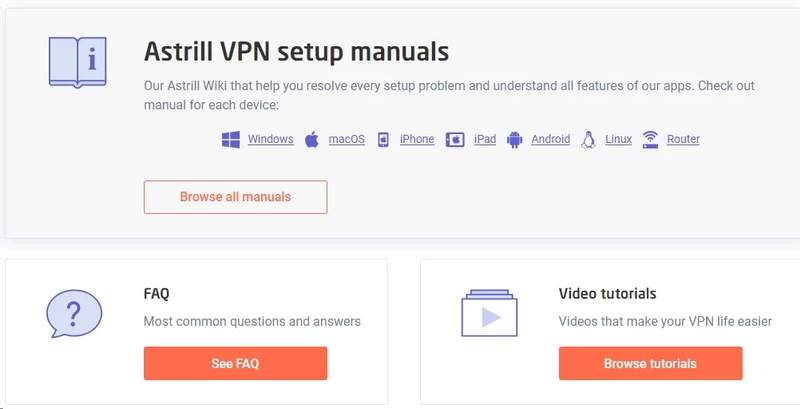
- The Astrill Wiki is a genuinely technical resource covering manual router configurations, Linux installations, port forwarding setups, and protocol troubleshooting at a depth that most VPN help centers do not approach.
- Frontline chat agents frequently respond with scripted answers that copy links from the Wiki rather than providing direct technical guidance. Complex issues require escalation to the email ticket system.
For a product this technically demanding, documentation quality is not a secondary concern. Power users configuring port forwarding on a dedicated IP, setting up VPN connection sharing across a local network, or troubleshooting StealthVPN handshake failures in a censored environment need accurate, detailed technical resources. Astrill meets this need better than most VPNs, with real limitations at the live support level.
24/7 live chat and the Astrill Wiki
The Astrill Wiki is the strongest element of the support ecosystem. It reads like a network administrator’s reference document, not a marketing help center. It covers installing the VPN on obscure Linux distributions, configuring split tunneling rules through the command line, and flashing DD-WRT router firmware with detailed, step-by-step guidance. Alongside the Wiki, Astrill hosts video tutorials that walk through the Windows interface visually, which reduces the friction for users encountering the dated UI for the first time.
Live chat operates around the clock. In testing across multiple time zones, connection to a live agent consistently stayed under three minutes. This matters specifically for expats in Asia who need support at hours when US and European support centers are offline.
The quality of the live chat interaction is the problem. Frontline agents respond quickly but frequently rely on scripted replies. When presented with specific technical queries (StealthVPN handshake timeouts, MTU payload failures, App Guard triggering delays), the initial response was often a copy-pasted link to the relevant Wiki section rather than direct technical analysis. Resolving complex, non-standard network issues requires escalating to the email ticketing system, where Tier-2 engineers provide detailed responses, at the cost of slower turnaround time.
FAQ
Does Astrill VPN work in China?
Yes, Astrill VPN is one of the most reliable services for bypassing the Great Firewall of China. Its proprietary StealthVPN protocol disguises traffic to evade deep packet inspection (DPI), which is used by Chinese censors to block standard VPNs. This technology, combined with servers optimized for Asia, allows users to access global content like Google and YouTube from within the country.
Why is Astrill VPN so expensive?
Astrill VPN is expensive because it focuses on developing and maintaining advanced obfuscation technologies to defeat state-level censorship, rather than catering to the mass market. The premium price of up to $30 a month funds its proprietary StealthVPN and a network engineered to bypass systems like China’s Great Firewall. This specialized focus makes it a high-cost tool for users who prioritize guaranteed access over budget pricing.
Can I use Astrill VPN on my router?
Yes, you can install Astrill VPN directly on compatible routers to protect your entire home network. The service provides custom firmware applets for routers running DD-WRT, Tomato, and ASUS Merlin firmware, which simplifies the setup process. Installing Astrill on a router secures devices that don’t support native VPN apps, such as gaming consoles and smart TVs, and only counts as one of your five simultaneous connections.
What is Astrill Smart Mode?
Astrill’s Smart Mode is an intelligent split-tunneling feature designed for users in highly censored countries like China. This mode automatically routes traffic to local websites outside the VPN tunnel, preserving fast access to regional services. Simultaneously, it sends traffic for international or blocked websites through the encrypted VPN tunnel, providing seamless access to the global internet without manual switching.
What is the VIP Add-on for Astrill?
The VIP add-on for Astrill VPN is an optional upgrade that provides access to premium servers with optimized routing for users in Asia. These servers are designed to deliver lower latency and more stable connections, making them ideal for gaming or business use. The VIP package also unlocks the Multi-hop VPN feature for enhanced security, but it comes at an additional monthly cost and includes a traffic limit.

