

Proton VPN Review 2026: Best Free VPN or Overrated Privacy Brand?
| 💰 Pricing | Free plan available; paid from around 2.99 USD/month on 2‑year plans |
| ✅ Free Trial | ✅ |
| 📆 Money Back Guarantee | 30 Days |
| 🗺 Jurisdiction | Switzerland |
| 🖥 Number of Servers | 17,000+ |
| 📝 Logging Policy | No‑logs |
| 📥 Torrenting/P2P | P2P/torrenting allowed on almost all paid servers |
| 🍿 Streaming | Paid plans work with many major platforms and over 90 streaming services |
| 🛡 Kill Switch | ✅ |
| ⚙️ Protocols | Supports OpenVPN, WireGuard‑based protocol, and its own Stealth/obfuscated protocol |
| 🛠 Support | Live-chat is available but not 24/7 in all regions yet |
| 💻 Simultaneous Devices | up to 10 devices |
| 🔥 Current Deal | 70% OFF (on 2-year plan) |
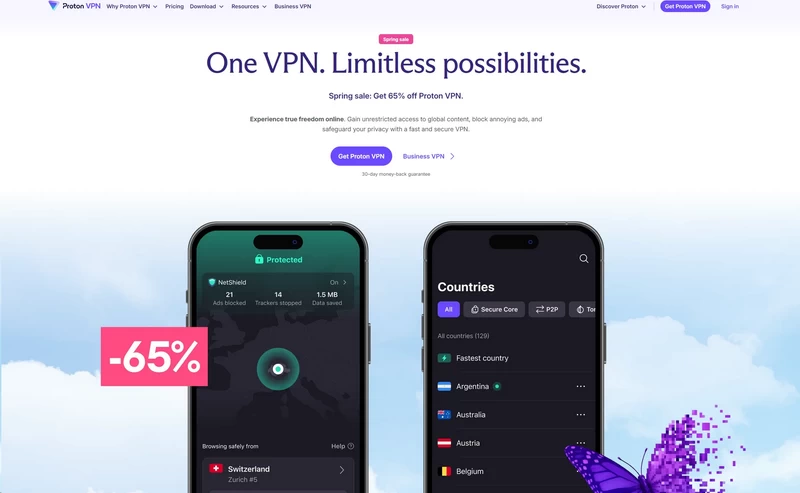
Proton VPN Overview
Swiss Jurisdiction: Structural Advantage, Not Immunity
Proton VPN operates under Swiss law – outside 5 Eyes and 14 Eyes surveillance alliances – governed by the Federal Act on Data Protection (FADP), one of the stricter data frameworks in Europe. That jurisdictional position isn’t marketing: Proton published a transparency report documenting 29 denied legal requests. Most US- or UK-based providers cannot legally push back to the same degree. Their domestic frameworks don’t give them that latitude.
“Switzerland is neutral” still deserves a hard squint. Switzerland participates in mutual legal assistance treaties (MLATs) and cooperates with cross-border law enforcement – documented in practice, not just theorized. The jurisdiction raises the friction cost of compelling Proton; it does not eliminate the possibility. The real protection is architectural: open-source clients, independently audited no-logs infrastructure, and a legal environment structurally aligned with those claims. The Swiss flag is the marketing layer on top of the engineering.
Proton AG also operates ProtonMail, ProtonDrive, ProtonPass, and ProtonCalendar – making it a full-stack privacy ecosystem, not a standalone VPN vendor. That vertical integration is either reassuring depth or a larger single point of failure, depending on threat model. Proton has stated it would migrate infrastructure if Swiss law ever forced privacy-eroding changes. A reasonable contingency pledge. One that has never been tested at scale.
Proton VPN Pricing & Plans: Free Tier, Plus, Unlimited, Duo, Family
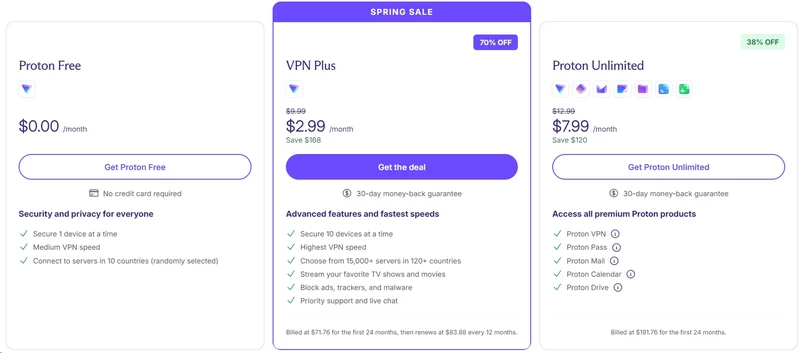
The Free Plan: Genuine Utility, Deliberate Ceiling
Proton’s free tier carries no data cap – unlimited traffic across 8+ server locations including US, Netherlands, Japan, Romania, Poland, Norway, Singapore, and Canada. TunnelBear caps free users at 2GB/month. Windscribe at 10GB/month. Those aren’t inconveniences – they structurally prevent daily use. Proton’s free plan is legitimately usable as a daily privacy driver for basic tasks. The gap between it and the competition is not narrow.
The limitations are real and architectural, not incidental. Free users are restricted to 1 simultaneous device. No streaming unblocking. No P2P/torrenting. No Secure Core multi-hop routing. No NetShield filtering. No Tor over VPN. No access to 10 Gbps high-performance servers. The most underappreciated restriction: free users cannot manually select a server. Proton assigns one algorithmically and throttles reconnection attempts to prevent server cycling. Under peak load, free server speeds fluctuate with no SLA and no recourse.
What Proton built here is a customer acquisition funnel architected as public service – and it functions as both simultaneously. Creating a Proton account for the free VPN automatically unlocks free-tier access to ProtonMail, ProtonDrive, and ProtonPass. The ecosystem lock-in is deliberate. The products are genuinely useful. Proton is betting that enough free users convert to paid Unlimited subscribers to justify carrying unlimited-data free users. That math works for them. It also works for users – which is why this plan is structurally difficult to criticize.
Introductory Rates vs. Renewal Reality
If you want the actual product, you have to pay for it. Proton offers two primary paid avenues: VPN Plus and Proton Unlimited. As is standard across the industry, the pricing structure is heavily weighted to punish short-term commitment and reward long-term lock-in.
At $9.99 per month, the rolling monthly Plus plan is relatively standard, undercutting the inflated monthly costs of ExpressVPN but sitting higher than budget providers. The real value supposedly kicks in at the two-year mark. However, compared to budget-focused rivals like Surfshark, which routinely drops well below three bucks a month, Proton demands a noticeable premium for its Swiss branding.
| Plan | Billing Cycle | Intro Rate | Renewal Rate |
|---|---|---|---|
| VPN Plus | Monthly | $9.99/mo | $9.99/mo |
| VPN Plus | Annual | $41.88/yr ($3.49/mo) | $119.88/yr ($9.99/mo) |
| VPN Plus | 2-Year | $71.76 ($2.99/mo) | $119.88/yr ($9.99/mo) |
| Proton Unlimited | Monthly | $12.99/mo | $12.99/mo |
| Proton Unlimited | Annual | $119.88/yr ($9.99/mo) | $155.88/yr($12.99/mo) |
| Proton Unlimited | 2-Year | $191.76 ($7.99/mo) | $155.88/yr($12.99/mo) |
| Proton Duo | Annual | €179.88/yr (€14.99/mo) | €19.99/mo |
| Proton Family | Annual | €287.88/yr (€23.99/mo) | €29.99/mo |
Note: Proton occasionally runs exclusive promotional sales bringing the 2-year Plus plan down to $2.99/month, but standard renewal rates heavily apply.
The Proton Unlimited plan bundles their encrypted email, calendar, password manager, and cloud storage into a single ecosystem. If you are actively trying to de-Google your digital life, paying $7.99 per month on the two-year tier is objectively a decent bargain for a comprehensive privacy suite. If you just want a secure tunnel to hide your BitTorrent traffic, paying for the Unlimited bundle is gross overkill.
Refund Policy: Fair Structure, Not the Longest Window
Proton offers a 30-day money-back guarantee on all paid plans, prorated on usage. Cancel on day 10 of an annual plan and receive credit for the remaining 20 days – not a binary refund-or-nothing structure. No reported patterns of Proton denying legitimate refund requests. The process runs through account settings without requiring support negotiation.
Thirty days is not the industry ceiling. CyberGhost offers 45 days on annual and multi-year plans – an additional two weeks that matters for methodical testers verifying streaming compatibility across travel scenarios or running multi-region speed comparisons. Proton matches the industry average. It does not beat it.
Proton VPN Features & Apps: Secure Core, NetShield, Stealth, Device Limits
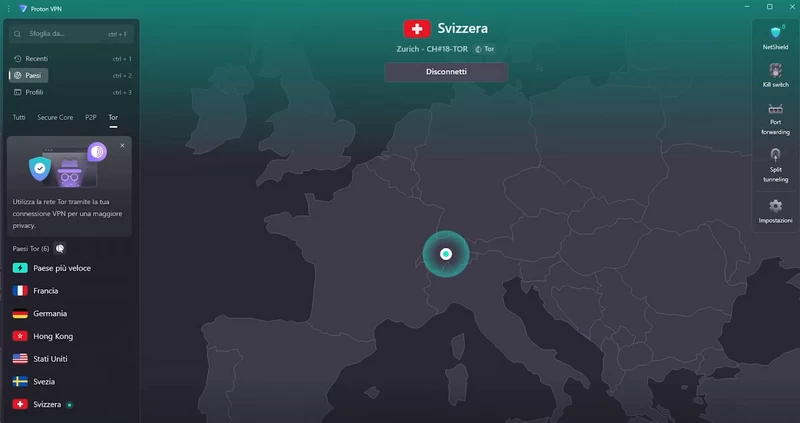
Secure Core: High-Security Architecture, Narrow Use Case
Secure Core routes traffic through two VPN servers sequentially before reaching the open internet. Your connection enters a hardened Secure Core node in Switzerland, Iceland, or Sweden – then exits through a standard Proton server in your target country. If the exit server is compromised, seized, or intercepted, the attacker sees only encrypted traffic originating from the Secure Core node. Tracing back to your real IP requires simultaneously compromising two servers in separate jurisdictions. That’s a materially harder problem.
The physical infrastructure reinforces the threat model. Proton’s Swiss Secure Core node operates in a former military bunker. The Iceland node runs in a data center Proton owns outright – controlled hardware, not rented rack space. These are not marketing claims. When Proton describes hardware-level protection, the threat model includes physical facility access, not just API subpoenas. That’s a different posture than most VPN providers maintain.
Secure Core is the right tool for a specific threat profile: journalists in high-surveillance jurisdictions, dissidents routing traffic through legally hostile exit countries, anyone whose adversary is a nation-state rather than a copyright enforcement firm. For the average user masking their Netflix region or encrypting a café connection, Secure Core allocates engineering budget against a threat that doesn’t exist in their use case. The performance cost is real – multi-hop routing adds measurable latency by design, compounding on an already-elevated baseline latency profile. Use it if your threat model justifies it. Running it as a default costs speed for no practical security gain in civilian scenarios.
Device Limit: Adequate, Not Limitless

Proton VPN’s premium plans support 10 simultaneous connections – enough for two laptops, two phones, a tablet, a smart TV, and a router-level device with capacity remaining. Above the 5–6 connection ceiling that persisted as industry standard for years. Sufficient for most households and couples sharing a subscription.
Surfshark, IPVanish, and Windscribe offer unlimited simultaneous connections. On a spec sheet, that sounds dramatically better. In practice, users owning fewer than 10 concurrently active devices – the overwhelming majority – see zero functional difference. The ceiling becomes a real constraint only in small business or distributed team deployments where a single subscription needs to cover 12+ users. Proton’s answer to that scenario is not a higher-limit plan – it’s Proton Duo at €19.99/month or Proton Family at €29.99/month. These are multi-account bundles at a slight discount, not unlimited-connection plans. A structurally different solution that costs more.
Protocol Stack: WireGuard Leads, Stealth Is the Differentiator
Proton’s protocol stack covers the necessary bases. WireGuard defaults on most connections – approximately 4,000 lines of code versus OpenVPN’s 70,000+, running in kernel space for lower per-packet CPU overhead, faster handshakes, and near-instantaneous re-establishment when mobile networks switch. OpenVPN is available in both UDP and TCP for compatibility and firewall traversal. IKEv2 serves Apple hardware cleanly given native OS integration. WireGuard plus OpenVPN plus IKEv2 is table stakes at this price point in 2026.
The actual differentiator is Stealth – Proton’s proprietary obfuscation layer built on top of WireGuard, designed to make VPN traffic visually indistinguishable from standard HTTPS under deep packet inspection. The practical target: corporate firewalls blocking VPN ports, ISPs throttling VPN traffic, and state-level censorship infrastructure in countries like China, Iran, and Russia where standard VPN protocols are actively fingerprinted and blocked. Building Stealth on WireGuard rather than OpenVPN gives it a performance foundation that legacy obfuscation approaches lack. NordVPN’s Obfuscated Servers and ExpressVPN’s Lightway obfuscation layer are comparable in intent; Proton’s WireGuard base is a technical advantage.
Smart Protocol Selection (SPS) automates the protocol hierarchy: WireGuard when available, IKEv2 or OpenVPN as fallback, Stealth when everything else is blocked. For most users, this removes a friction point that caused confusion without adding technical value. Power users can override it manually. SPS is competent UX engineering – not a breakthrough feature – but it means non-technical users never face a broken connection they don’t understand.
NetShield: DNS Filter, Not an Ad Blocker
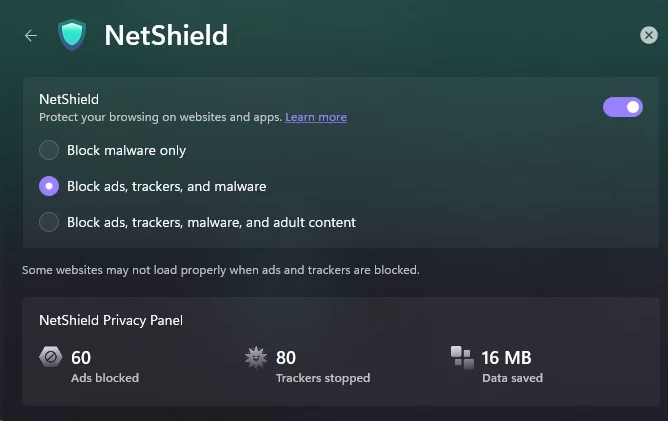
NetShield operates at the DNS resolution layer – intercepting queries and blocking resolution for domains on its threat lists: known malware distribution infrastructure, tracker networks, ad-serving domains. The mechanism is technically identical to Pi-hole, NextDNS, and Cloudflare’s 1.1.1.2 filtering service. For blocking common tracker domains and catalogued malware distribution points, it functions as described.
The limitation is structural, not a tuning problem. DNS-level filtering cannot block ads served from the same domain as legitimate content – which is exactly how Google’s advertising infrastructure works. YouTube pre-roll ads are delivered from youtube.com, not a blockable subdomain. NetShield does nothing to ad load on Google properties, YouTube, Facebook, or any platform that has migrated ad delivery in-house specifically because it defeats DNS filtering. For meaningful ad blocking, a browser extension running content-based filtering – uBlock Origin – is the correct tool.
Malware blocking follows the same structural limit. NetShield catches known-bad domains that have been catalogued and listed. It does not catch novel distribution infrastructure registered in the last 24–48 hours, zero-day domains, or payloads delivered over HTTPS from legitimately registered but compromised domains. Independent testing has found detection gaps relative to dedicated endpoint security solutions. This is not surprising – it’s the ceiling of the mechanism, not a failure of execution. Treat NetShield as lightweight supplementary filtering. It reduces tracker noise. It is not a security product in the complete sense of that phrase.
Proton VPN Speed & Performance: WireGuard, Stealth, Accelerator Tests
Protocol Performance: WireGuard’s Ceiling, Stealth’s Tax
WireGuard operates in kernel space – lower CPU overhead per packet, faster cryptographic handshakes, and minimal connection re-establishment time on network switches. On stable high-bandwidth connections, WireGuard delivers the closest approximation to raw ISP throughput that a VPN tunnel can offer. The architecture justifies its status as the performance default.
OpenVPN TCP and IKEv2 occupy the functional middle tier. On a 100 Mbps line, the performance delta is acceptable. On a 900 Mbps fiber connection, protocol choice becomes the primary variable determining whether throughput is 800 Mbps or 500 Mbps through the tunnel – a difference that scales with base connection speed. IKEv2 performs acceptably on Apple hardware with native OS integration; it is not a speed leader.
Stealth carries an explicit performance cost. Wrapping WireGuard traffic to defeat deep packet inspection adds encapsulation overhead at both tunnel endpoints – additional processing, additional latency, material throughput reduction relative to native WireGuard on the same server. Stealth is a censorship circumvention tool, not a speed-optimized protocol. Using it as a daily driver on an unrestricted connection is self-imposed overhead with no compensating benefit. Smart Protocol Selection handles this correctly by defaulting to WireGuard and escalating to Stealth only when the environment forces it.
Speed Testing: What the Numbers Actually Show
These results reflect an approximately 1000 Mbps baseline connection – a fiber line that stress-tests a VPN’s real throughput ceiling rather than concealing poor performance behind a slow base.
| Test Scenario | Download (Mbps) | Upload (Mbps) | Latency |
|---|---|---|---|
| Base (No VPN) | ~1000 | ~1000 | Baseline |
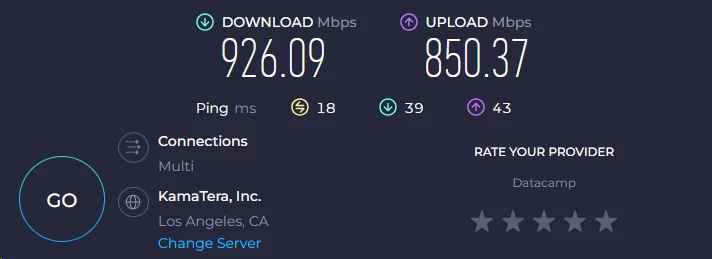
| Local Server (WireGuard) | 926 | 850 | Low |
| US Server (Denver) | 748 | 690 | Low |
| EU Server (London) | 536 | 512 | Moderate |
| Asia Server (Tokio) | 238 | 173 | Elevated |
Local and US results – 926 Mbps and 748 Mbps respectively – are among the stronger throughput figures in the premium VPN category. EU performance at 500+ Mbps handles any real-world workload. Asia drops to 238 Mbps download, 173 Mbps upload – with elevated latency – a combination that significantly impacts latency-sensitive applications, though this is primarily a routing distance limitation rather than a network architecture failure.
Upload variance remains the most notable inconsistency in this dataset. Speeds range from 850 Mbps down to 173 Mbps depending on server selection – a substantial drop, though not a critical failure scenario. Users running video calls, cloud backups, Twitch streaming, or large file uploads may experience reduced performance on distant servers, but the connection remains usable in most cases. Upload continues to be the weaker axis across VPN testing broadly, with performance influenced heavily by server load and routing conditions, meaning results may vary between sessions.
Latency, Jitter, and Gaming
Raw download speed means nothing if your connection is unstable underneath it. Gamers and stock traders don’t care about gigabit throughput – they care about round-trip packet time, and on local servers Proton performs acceptably. Connect to a node within your own region and ping generally stays under 30ms, which is viable for casual online gaming and VoIP calls.
Physics doesn’t negotiate, however. Routing through distant servers produces latency that makes real-time applications non-functional: US connections to South Africa and Asia recorded 296ms and 326ms respectively. Stacking Secure Core on top of that – bouncing traffic through a hardened Swiss or Icelandic facility before exiting in Tokyo – compounds an already bad number into an unusable one. For competitive gaming on foreign servers, that routing chain is a liability, not a feature.
The more granular problem is jitter. Where latency measures the baseline round-trip time, jitter measures how much that number fluctuates – and fluctuation is what causes rubber-banding, desynchronization, and dropped voice packets in real-time applications. Proton recorded jitter of 5.2ms under normal conditions climbing to 35ms under stress testing. That upper figure is a noticeable, session-disrupting variance that competitors like NordVPN handle more consistently in equivalent test conditions.
The practical guidance is narrow: use the closest physical server to your location, leave Secure Core off, and accept that no VPN eliminates latency overhead – it only manages how much it adds. If you’re playing a competitive title where a 28ms jitter spike costs you the match, the correct answer is to disable the VPN entirely. Security tooling and network responsiveness are in tension by design, and Proton doesn’t resolve that tension differently than any other provider.
VPN Accelerator – Marketing vs. Math
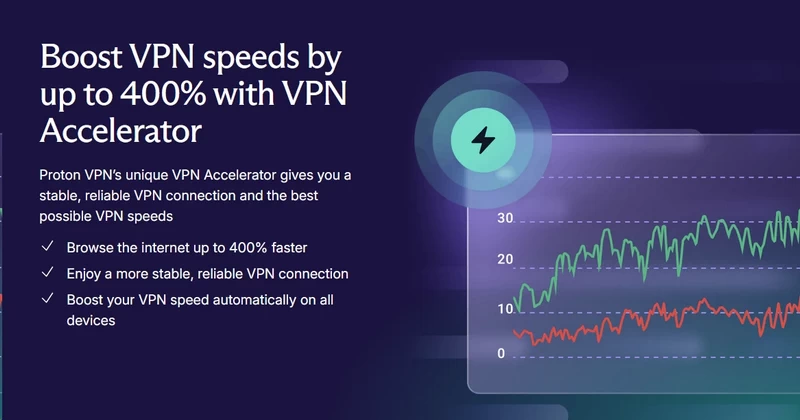
Proton’s marketing team eventually got to VPN Accelerator, and the damage is a “up to 400%” speed improvement claim that belongs on a landing page, not in a technical conversation. Arbitrary ceiling percentages with no defined baseline or test conditions are a reflexive red flag – you cannot manufacture bandwidth your ISP doesn’t provision, and no software layer eliminates distance-based latency. Ignore the number.
The underlying technology, stripped of the advertising copy, is legitimately clever. Standard VPN protocol implementations process cryptographic operations on a single CPU thread, which creates a hard processing bottleneck when a server handles thousands of concurrent users. Proton’s engineers extended both the OpenVPN and WireGuard implementations to support multithreading – distributing the cryptographic workload across multiple CPU cores and eliminating the single-thread ceiling that chokes throughput under load. That’s real engineering solving a real architectural constraint.
The second component addresses packet loss behavior on long-distance routing. Proton’s implementation deploys BBR – Bottleneck Bandwidth and Round-trip propagation time – as its congestion control algorithm. Standard TCP congestion control responds to packet loss by aggressively reducing transmission rate, which is conservative behavior that compounds badly across transcontinental routes where minor packet loss at internet exchange points is routine rather than exceptional. BBR maintains throughput through minor loss events instead of penalizing the entire connection, which keeps distant server speeds from collapsing into unusable territory.
In practice, VPN Accelerator does what the engineering rationale suggests it should: distant server connections that would otherwise degrade significantly remain meaningfully more stable. The 400% figure is noise. The multithreading and BBR implementation is signal. Leave it enabled – it’s one of the few proprietary performance features in this industry that holds up when you look at the mechanism rather than the marketing.
Free vs. Paid Performance: Honest About the Gap
Testing finds free plan users retaining approximately 34% of baseline connection speed under favorable server load – a best case, not a median. Free servers carry disproportionate load relative to paid infrastructure, and that load concentrates during peak hours in each region’s timezone.
The speed reduction is compounded by Proton’s reconnection throttle. After sustained usage approaching approximately 1GB of traffic, the client blocks server-cycling attempts. On an already-loaded free server, that creates a compounding problem: slower speeds because the server is congested, and no exit because the client prevents migration. This is deliberate product engineering – it protects paid-tier performance by preventing free users from load-balancing themselves onto lower-congestion infrastructure.
Paid users on WireGuard connecting to Proton’s 10 Gbps high-performance servers – gated behind premium subscription – operate on entirely separate network infrastructure from the free tier. The free and paid tiers are not competing for the same server resources. That separation is why paid performance looks as strong as 90% speed retention on local servers while free users see 34% on favorable days. The upgrade argument lives in that 56-point gap – and it’s a numerically honest one.
Proton VPN Security & Privacy: No‑Logs Policy, Audits, Jurisdiction
No-Logs Policy: Architecture Over Promise
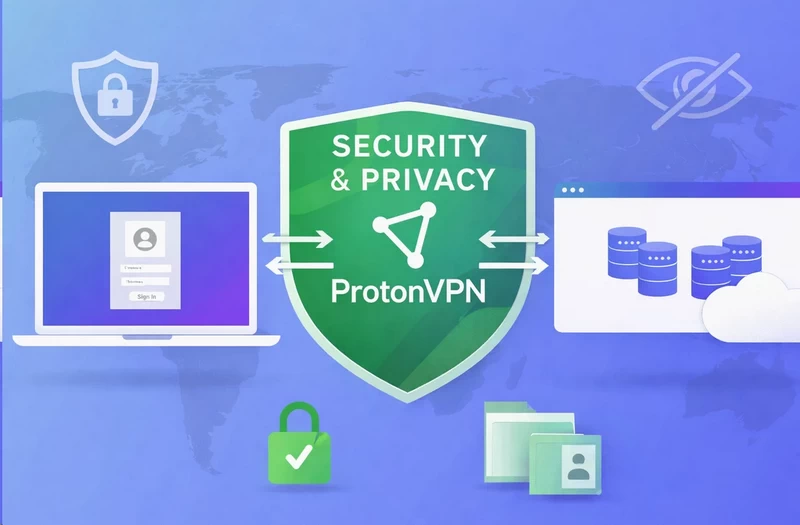
Proton’s no-logs architecture is among the more credibly constructed in the VPN industry, and the jurisdictional alignment is structural rather than cosmetic. Swiss law does not compel VPN providers to retain connection logs, timestamps, or traffic metadata as routine surveillance infrastructure – a meaningful contrast to providers incorporated in the US, UK, or EU member states where data retention directives create legal pressure to maintain records that can subsequently be subpoenaed.
The 29 denied legal requests figure from Proton’s transparency reports matters for a specific reason: Proton’s position is that it cannot produce logs it does not retain. That transforms legal compliance from a policy question into an architectural one. If the data doesn’t exist, the court order produces nothing regardless of whether Proton cooperates. This is the correct engineering approach – make compliance with surveillance requests technically impossible rather than relying on a provider’s willingness to resist legal pressure under duress.
The 2021 ProtonMail case is the necessary counterweight. Under a legally binding Swiss order, Proton produced the account recovery email address of a French climate activist – leading to identification and arrest. Proton VPN connection logs were not involved. The VPN architecture was not compromised. What was produced was account-level registration metadata the user had voluntarily provided. The lesson is not that Proton logs VPN activity. The lesson is that “no logs” applies specifically to tunnel activity – the broader account infrastructure holds data points that can be compelled under the right legal circumstances. Use a throwaway registration email if your threat model warrants it.
Audits & Transparency: Recurring, Not Ceremonial
Proton’s audit history separates it from providers that commissioned a single review in 2019 and haven’t invited outside scrutiny since. A VPN audited once, years ago, is signaling something about its confidence in current code.
SEC Consult conducted infrastructure and no-logs verification audits covering Proton’s server architecture and data handling. Securitum – a European penetration testing firm – completed application security audits in both 2024 and 2025, covering client applications across all major platforms. The 2025 audit post-dates Proton’s significant UI overhaul, meaning the security review reflects the actual codebase users are running today. Audit findings are published with vulnerability disclosures and remediation status – Proton does not selectively publish clean results, which is the correct approach and not universal in this industry.
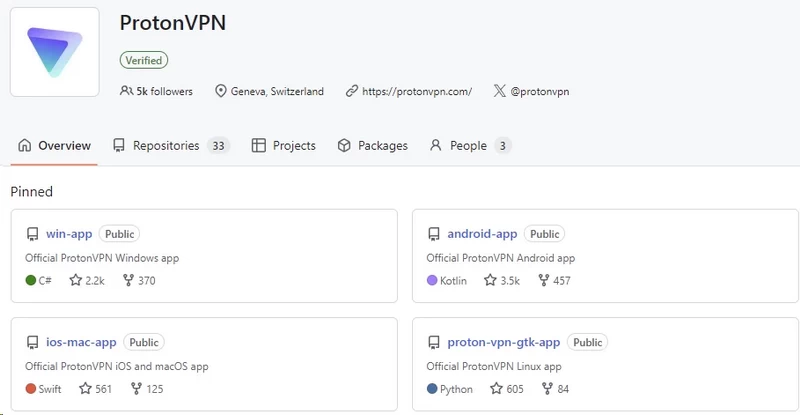
Proton operates an active bug bounty program creating continuous external review alongside formal point-in-time audits. Client applications across Windows, macOS, Linux, iOS, and Android are fully open-source – any researcher can inspect the code without waiting for an audit cycle or a bounty payout. Open-source clients don’t guarantee security, but they make sustained deception about codebase behavior structurally difficult. Recurring audits from named firms with published results, combined with open-source clients and an active bug bounty: this is the current credible standard for VPN transparency. Proton meets it.
RAM-Only Infrastructure: A Deliberate Rejection With a Hidden Implication
ExpressVPN’s TrustedServer and NordVPN’s diskless server rollout both position RAM-only infrastructure as a premium security differentiator. The argument is straightforward: data stored exclusively in volatile memory is wiped on power cycle, so physical server seizure yields nothing recoverable. Law enforcement pulls the power – the forensic drive image doesn’t exist.
Proton has explicitly and publicly rejected the RAM-only model, and the reasoning deserves engagement rather than dismissal. Proton’s position: if a no-logs architecture is correctly implemented, there is nothing meaningful on disk to seize – because connection logs, user activity, and identifiable metadata are never written to persistent storage in the first place. In this framing, RAM-only solves a problem that a properly engineered no-logs system doesn’t have. The threat model it addresses – server seizure recovering incriminating log files – only materializes if logs were being written to disk.
The implication worth sitting with: RAM-only architecture is simultaneously a genuine security enhancement and a tacit admission that the underlying logging practices required that additional protection layer. A provider that never writes logs doesn’t need volatile storage to prevent log recovery – the logs don’t exist on either medium. Proton’s rejection of RAM-only is internally consistent with its architectural claims. It does introduce a dependency: those claims must remain accurate and maintained across a global server fleet, verified by audits at discrete points in time rather than enforced by persistent hardware architecture. RAM-only provides a continuous, hardware-enforced guarantee. Proton’s approach relies on architecture plus audit cadence. Both are defensible engineering philosophies. Neither is fraudulent. The difference is where the security guarantee lives – in the hardware, or in the audit.
Proton VPN Servers & Locations: 120+ Countries, Smart Routing Explained
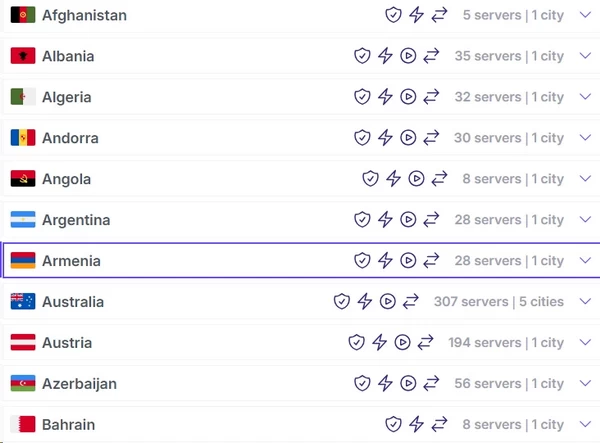
120 Countries: Coverage Is Real, Uniformity Is Not
Proton VPN operates across 120 countries and over 17000 servers. The immediate qualification that matters: server count and geographic coverage are not the same as physical infrastructure presence in every listed country. The core distinction is between physical hardware in the claimed jurisdiction versus virtual servers carrying that country’s IP address while processing traffic on hardware elsewhere.
This distinction has two practical consequences. Latency: a “Tokyo” server running on hardware in Los Angeles performs like a Los Angeles server regardless of what flag appears in the client. Jurisdiction: traffic handled by hardware in a different country is subject to that country’s laws, not the labeled one.
Proton uses Smart Routing for portions of its network – virtual server architecture where traffic receives a target-country IP but is physically processed elsewhere. To its credit, Proton labels virtual servers directly within the client application, rather than burying that disclosure in a support document. In-app transparency on virtual server status puts Proton ahead of providers maintaining the same infrastructure mix without disclosure. That transparency doesn’t eliminate the latency and jurisdictional implications – it makes them navigable. For content access purposes, the IP geolocation is what matters, and virtual servers deliver that correctly. For users specifically concerned about which country’s legal framework governs their traffic at the hardware level, the virtual server status is material and checkable per-server before connecting. Proton’s physical server density is concentrated in North America, Western Europe, and major Asia-Pacific hubs. The 120-country footprint is real in IP coverage. It is not uniformly real in physical hardware presence.
Censorship Circumvention: Stealth Is a Tool, Not a Guarantee
Proton’s mechanism for bypassing state-level censorship is the Stealth protocol – obfuscated WireGuard designed to appear as standard HTTPS under deep packet inspection. The design directly targets Great Firewall pattern matching, DPI-based VPN fingerprinting, and port-level blocking that catches standard VPN protocols at the network edge. Stealth removes the identifiable handshake signatures DPI systems use to classify and block VPN traffic.
China is where the practical ceiling becomes visible. Based on available evidence from in-country users and independent reviewers: Stealth performs inconsistently against the Great Firewall. It works often enough to make Proton a viable option relative to providers offering no obfuscation at all. It does not work reliably enough to support categorical guarantees. The Great Firewall undergoes continuous refinement – detection techniques that fail against Stealth today may be updated within days. No provider can honestly claim consistent, always-on bypass capability in China without overstating their reliability. Proton does not make that overclaim. That’s the correct posture.
In environments with less sophisticated filtering than China’s – corporate networks blocking VPN ports, national ISPs applying broad protocol restrictions in Iran or Russia – Stealth performs more reliably because the detection systems are less adaptive. Users in those environments report reasonable success rates. The broader reality: censorship circumvention capability exists on a spectrum tied to the sophistication of the filtering system being bypassed. Stealth is a genuine tool, not a marketing checkbox. Go in with calibrated expectations and a fallback option identified.
Proton VPN for Streaming: Netflix, BBC iPlayer and Other Platforms

Streaming Architecture: Dedicated Infrastructure, Managed Access
Proton’s approach to streaming unblocking runs on dedicated, labeled streaming servers rather than routing all traffic through generic infrastructure and hoping geolocation holds. Servers optimized for content access are explicitly marked in the client – users aren’t guessing which server will work. This matters operationally because streaming platforms run continuous IP detection systems that identify and block VPN-associated addresses on a rolling basis, and maintaining access requires active IP management rather than a static pool that degrades as addresses get flagged.
The maintenance side is where provider capability separates into tiers. Netflix, Disney+, and BBC iPlayer run particularly aggressive VPN detection – cycling through known VPN IP ranges and blocking on a rolling basis. Providers that sustain unblocking are rotating flagged addresses, maintaining sufficient regional server density to retire blocked IPs and deploy fresh ones, or sourcing residential IPs that make VPN traffic appear as home broadband. Proton has demonstrated sustained unblocking across major platforms – this is not a launch-window feature that degraded within months. The labeled server architecture also isolates streaming-optimized infrastructure from general-use servers, preventing heavy P2P traffic from degrading the IP reputation of addresses used for content access.
Unblocking Results: What Opens, What Doesn’t, and the Caveats
Netflix
- 🟢 US – consistently unblocked across multiple independent test sources
- 🟢 UK – unblocked, sustained reliability
- 🟢 Japan – unblocked, including region-specific library access
- 🟢 Australia – unblocked
- 🟡 Other regions – results vary by source and test date; not universally confirmed
Other Major Platforms
- 🟢 Disney+ – unblocked across US and international libraries
- 🟢 BBC iPlayer – unblocked; historically one of the harder targets given active VPN blocking
- 🟢 Amazon Prime Video – unblocked
- 🟢 Hulu – unblocked on US servers
- 🟡 Paramount+, Peacock – results inconsistent across sources
Free Plan
- 🔴 Streaming unblocking – not supported; free servers are not part of streaming-optimized infrastructure
- 🔴 Netflix, BBC iPlayer, Disney+ – fail or return local library on free tier
- 🔴 No workaround exists within the free tier
The free plan streaming failures are architectural, not bugs. Deliberate product boundaries. Streaming unblocking results are among the least stable data points in VPN testing because they reflect a snapshot of an ongoing technical arms race. A server unblocking Netflix Japan on one test date may be blocked two weeks later – and both results are accurate for their moment. The meaningful signal is sustained capability over months, not single test sessions. Proton’s track record on that longer timeframe – particularly BBC iPlayer and Netflix US – holds up across sources and test windows better than most competitors in the premium category manage.
Proton VPN Customer Support: Live Chat Hours, Docs and Real Response Times
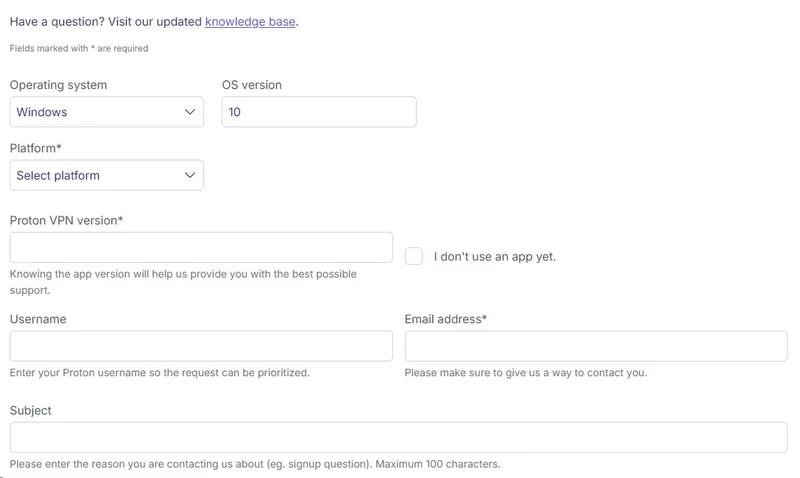
Proton offers live chat as its primary real-time contact channel. When agents are online, response times are measured in seconds – not minutes – with technically grounded responses that don’t read as first-tier script-following. The operational constraint: live chat runs approximately 15 hours per day, not 24/7. If your VPN drops at 2AM and you need immediate human assistance, you’re filing a ticket and waiting.
For a product positioned at the premium end of the market and used by journalists, activists, and business users in time-sensitive environments, the absence of round-the-clock live support is a gap worth naming directly. Email and ticket-based support carries a 1–2 business day response window – functional for non-urgent configuration questions, inadequate for active connection failures where the problem has cost you hours of productivity before a response arrives.
Proton partially offsets this with a well-structured documentation library and community forums where common issues often resolve faster than the ticket queue. The knowledge base is substantive – not the hollow FAQ scaffolding that passes for self-service support at lesser providers. None of that changes the calculus when you need a human at 2AM and the chat window is closed. Your options narrow to waiting or troubleshooting alone. For most civilian users, this is an acceptable tradeoff. For enterprise or high-stakes deployments, it’s a staffing gap that competitors with true 24/7 live support don’t ask you to absorb.
ProtonVPN FAQ
Is Proton VPN actually free?
Yes – Proton’s free tier is genuinely free with no data cap, no ads, and no payload harvesting. The real costs are a single-device limit, no streaming access, no server selection control, and free server speeds that fluctuate under load.
Is Proton VPN really no-logs?
The no-logs policy covers VPN tunnel activity – connection logs, browsing data, and originating IPs are not retained. A 2021 case demonstrated that account-level metadata like recovery email addresses can be legally compelled under Swiss law, so the no-logs guarantee is real but applies specifically to VPN traffic, not account registration data.
Can Proton VPN unblock Netflix?
Yes, on paid plans using designated streaming servers. Netflix US, UK, Japan, and Australia have been consistently unblocked across independent testing. Free plan users will not get streaming access – those servers are not part of the streaming-optimized infrastructure.
Is Proton VPN good for gaming?
Conditionally. Local and US server latency is manageable for casual gaming, but Proton’s tested latency increases of 60% on nearby servers climbing to 351% on distant ones make it a poor choice for competitive or latency-sensitive titles. If your server is geographically close, it’s workable. If you’re routing internationally, it isn’t.
Why is latency so high?
Physical routing distance and the overhead of VPN encapsulation both contribute. Proton’s VPN Accelerator improves throughput on distant connections but does not fix transit latency – that’s a physics problem, not a software one. Secure Core compounds the issue by adding a mandatory Swiss routing hop before the exit server.
Is Secure Core worth it?
For most users, no. Secure Core adds latency overhead and exists to protect against compromised exit servers – a threat relevant to journalists, dissidents, and high-risk targets, not typical privacy users. If your threat model doesn’t include nation-state adversaries targeting your exit node, the performance cost isn’t buying you meaningful protection.
Proton VPN vs NordVPN?
Proton wins on jurisdiction, open-source transparency, and free tier substance. NordVPN wins on speed consistency, server count, and 24/7 support availability. Proton’s introductory pricing is competitive; NordVPN’s renewal pricing is similarly structured. Choose Proton if privacy architecture is the priority; choose Nord if raw performance and support availability matter more.
Can Proton VPN bypass censorship in China?
Stealth protocol gives Proton a legitimate bypass mechanism that works inconsistently in China and more reliably in environments with less sophisticated filtering. No provider can guarantee consistent access through the Great Firewall – Proton doesn’t overclaim this, which is the honest position. Have a backup option ready.
How many devices can I use simultaneously?
Paid plans support 10 simultaneous connections. The free plan is capped at one device. Proton Duo and Proton Family plans operate as multi-account bundles rather than expanded single-account connection limits, so they don’t solve the per-account ceiling – they work around it.
How do I cancel and get a refund?
Cancellation is handled through account settings without requiring contact with support. Proton’s 30-day money-back guarantee is prorated – cancel after 10 days on an annual plan and you receive credit for the remaining 20. No reports of systematic refund denial exist, but the 30-day window is shorter than CyberGhost’s 45-day guarantee on long-term plans.

